Payments · Fintech · Entrepreneurship
How I entered the payment industry and why it still fascinates me
From telecom billing to card payment gateways and PayXpert: Nicolas Riegert recounts two decades of change in the payment industry.
01
Not a career I planned
I did not enter payments out of vocation. As a student, I never planned to work in payment systems, build a gateway or run a payment institution. I arrived almost by accident. Or rather through a succession of opportunities, technological disruptions and problems that needed solving.
Looking back, I find the same mechanism at almost every step: one technology disappears, another appears, usage shifts and, in between, a space opens where you have to understand quickly what is happening.
That is what took me from telecoms to card payments. Then from e-commerce to terminals. Then from cards to alternative payment methods. And I am convinced we are still only at the beginning of a new transformation.
“One technology disappears, another appears, and in between a space opens where you have to understand fast.”
02
London: entering a world I did not know
I initially arrived in the United Kingdom for a completely different reason. I had developed a project in France to connect independent consultants with small and mid-sized companies, and I wanted to give it a European dimension. London was meant to be one step of that international expansion. Then the dot-com bubble burst. Raising the necessary capital became much harder, and my project could not grow as I had imagined. I had to adapt.
Thanks to my initial training in accounting and tax, I joined a London firm specialising in accounting and company formation, where I became a partner. That is where I discovered a first form of payment particularly suited to the Internet of that era: premium-rate telephone numbers.
In the late 1990s and early 2000s, Internet access still largely happened through a modem. To use certain services or access certain content, the user called a premium-rate number. Connection time was then billed on their phone bill. Today the model looks almost prehistoric. At the time, it was a genuine digital payment method.
03
A problem of borders
I quickly noticed another particularity. The French market was relatively hard to access for foreign companies wanting to use French premium-rate numbers. And conversely, a French company wanting to monetise a service with British, German, Spanish or Italian customers had to build its relationships separately in each of those countries.
I had already developed a strong international streak. I saw a problem. And therefore an opportunity. I created a company specialising in the international supply of these telecom payment solutions: offering French numbers to foreign companies and allowing French companies to access equivalent solutions in other markets.
Volumes grew quickly. As they increased, we could renegotiate contracts with our telecom providers. A few extra fractions of margin multiplied by large volumes rapidly transformed the economics of the business. That allowed us to start considering acquisitions. And it was precisely while studying one of them that I understood our market was probably going to disappear.
04
The detail that changes everything
We were studying the acquisition of an American digital content company. Its business resembled that of some of our main European clients. But while analysing its revenues, something immediately struck me: it collected almost nothing through premium-rate numbers. It collected by bank card. That seems obvious today. At the time, it was not at all.
In Europe, one player in our industry had even chosen the name 'No Credit Card'. The name perfectly summed up the philosophy of our market: letting Internet users buy content or a service without having to use a bank card. But while we were perfecting this model, the very infrastructure that made it necessary was disappearing.
ADSL and then cable were gradually removing the modem. And once Internet access no longer required a phone call billed by the minute, much of the economic logic of premium-rate numbers disappeared with it. Our minute volumes were starting to decline. The trend was clear.
“It would have been tempting to defend the market we knew. I preferred to try to understand the one that would replace it.”
05
From the phone minute to the bank card
The American example had given me a lead. I looked more closely at card payments on the Internet and decided to develop a gateway allowing our clients to move progressively from telecom payment to card payment. It was still only a first step.
Shortly after, disagreements with my partners led me to sell them my stakes. I left London. I bought the sailing boat I had dreamed of for years and went to live in Barcelona. At that moment, I sincerely thought I was opening another chapter of my life.
I was living on Buddha Boat. I was sailing. I ran a few charters. I gave sailing lessons. I was discovering Spain and learning Spanish. I thought I had left payments. Payments were about to catch up with me quickly.
06
A boat is an excellent way to rediscover the need to earn money
A large classic sailing yacht is magnificent. It is also, as many boat owners know, a remarkable financial sinkhole. It was in this context that Pierre Achache contacted me again. Pierre had been a telecom line supplier for my former company. We had known each other for several years and had become close.
He needed a card payment solution for an important client we had shared. He knew I had already worked on the subject and asked whether I could help. I still knew the industry well. I searched. I found in Italy an e-money player starting its activity and looking for volumes. We had the clients. He had the infrastructure. Pierre and I decided to partner.
It was still very far from today's PayXpert. But it was the beginning of it.
“A large classic yacht is magnificent. It is also a remarkable financial sinkhole.”
07
Regulation forced us to become better
Our initial logic was commercial: finding solutions allowing merchants to accept their payments. Then the sector began to structure itself quickly. Security requirements around card data tightened with PCI DSS. We could no longer simply assemble other people's technologies. We had to master more of our infrastructure. Build. Secure. Document. Certify.
Then came European payment services regulation. Once again, we had two choices. Treat regulation as a constraint preventing us from working as before. Or do what was necessary to move to the next step. We progressively became a regulated player.
Each time, what initially appeared as a constraint ended up helping build a stronger company.
“Regulation can slow a company in the short term, but it can also become a formidable barrier to entry once you have mastered it.”
08
The merchant's real problem: getting the payment through
Meanwhile, our clients had a far more pragmatic obsession: conversion. A merchant is not really interested in the technical beauty of a payment platform. They want to know why 92 transactions out of 100 work and why the other eight fail. And above all how to recover some of them.
We were constantly asked: why was this payment declined? Why does this country convert less well? Why do payments work with one bank and less well with another? What does this error code mean? Is it a technical problem? Fraud? Authentication? An issuer refusal?
So we began developing our back-office far beyond what was then available on the market. We wanted to let the merchant see their payments, not simply receive a huge transaction file. We created a highly visual dashboard to navigate the data, look at errors, payment methods or behaviours and quickly identify unusual patterns. Then much more advanced statistical tools. The goal was to start from millions of transactions and progressively narrow down to a population precise enough to analyse transactions one by one if needed.
Today, this would naturally be called data-driven payment optimisation. For us, at the time, it was simply the answer to a question from our merchants: 'Why are my payments not going through?' That culture remains deeply rooted in PayXpert. Our current offering still emphasises transaction analysis, multi-acquiring and conversion optimisation.
09
Then WeChat Pay took us into stores
A new opportunity was about to radically widen our vision. WeChat Pay was looking to develop its acceptance among European merchants frequented by Chinese tourists. We had the opportunity to become one of the players enabling its acceptance and integrating it into payment terminals. For a company historically focused on e-commerce, this was our first real incursion into the world of physical payment.
One of our first major deployments was at Harrods in London. I was personally involved in the go-live. And when I arrived in the field, I discovered something fascinating.
10
Nine terminals on one counter
On a small payment desk, different terminals were lined up. One for certain cards. One for American Express. One for another payment method. Another for DCC. Yet another for WeChat Pay. And so on.
Then we started observing the processes around payment. To secure certain refunds, the store wanted a password control. Logical. Chinese customers paid with their phone and a QR code. Modern. Then a receipt was printed for them to sign. The receipt went to accounting to be scanned and archived. We could have an extremely modern payment method sitting in the middle of an organisational process from another era. And many of these steps could be digitalised.
So the problem was no longer only: how do you accept a payment? It became: how do you intelligently integrate payment into the merchant's entire journey? That is when I began to understand the true potential of omnichannel.
“Why do you need nine machines to do something a single one should be able to do?”
11
FRv6: starting almost from scratch
Another opportunity then came to brutally accelerate our learning. The Russian payment network MIR was looking to develop its acceptance outside Russia. We had little experience in traditional physical card payments, but a strong appetite to learn. We accepted the challenge. In return, we received support that allowed us to considerably accelerate our understanding of payment standards and the EMV environment.
Once this first integration was completed and certified, an Asian payment terminal manufacturer approached us. It wanted to certify its hardware for the French market to serve a major client. We took part in the tender. And we won it. We had just accepted a job whose scale we probably did not fully measure.
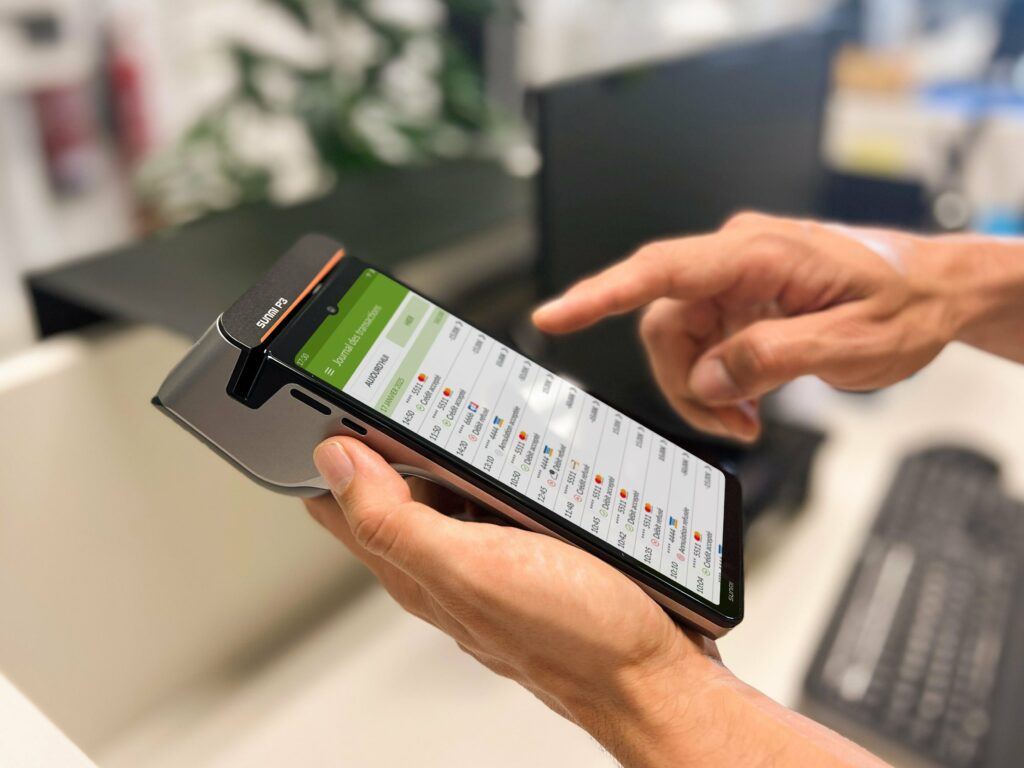
We now had to master the specifics of French card payment and develop to the FRv6 standard. For a company that historically came from online payment and alternative payment methods, it was a major shift. The work was considerable: protocols, EMV kernel, security, terminal behaviours, acquirer relationships, use cases, testing, certifications. Each new step revealed several more. But we had an exceptional technical team and, starting almost from scratch on some of these subjects, it managed to obtain the necessary certifications within timelines that remain, for me, one of the important technical achievements in PayXpert's history.
This adventure then led to the development of PayXpress and several generations of terminals certified for the French market. PayXpert products are today among the CB-EMV FRv6 certified solutions published by PayCert. We had started from telecom services, then an e-commerce gateway, then WeChat Pay. And we had become capable of building a complete physical payment solution. This journey explains a lot about how I look at the market today.
12
Payment is no longer a card
For a long time in Europe, talking about payment essentially meant talking about cash, cards and transfers. That equation no longer holds. When we started integrating WeChat Pay, many Europeans still saw QR code payments as an Asian curiosity. Yet they were the expression of a much deeper transformation.
In many countries, the mobile phone has become the infrastructure on which new financial usages can be built quickly. This allows new payment methods to spread extremely fast. Brazil is a remarkable illustration: the Central Bank of Brazil launched Pix in November 2020. A few years later, the system processes billions of monthly transactions and has helped reduce the use of cash while reaching populations previously less well served by certain financial services.
What is fascinating about Pix is not simply its success. It is the speed at which a new infrastructure can change the habits of an entire country.
13
From local to global
This evolution creates a paradox, however. Commerce is becoming more and more international. People travel more. E-commerce sites sell far beyond their borders. A merchant can be headquartered in France, have its acquiring in Spain, sell to a Brazilian consumer who wants to use Pix or welcome in its store a Chinese tourist used to paying with their phone. But at the same time, payment methods are multiplying locally: international cards, domestic schemes, wallets, instant transfers, QR codes, account-to-account, local solutions.
The consumer wants to use their usual payment method. The merchant does not want to integrate twenty different infrastructures. They want a single technical experience capable of handling that diversity. That is precisely where I see a large part of the future of payment players.
“Complexity does not disappear. It moves.”
14
Europe is starting to move too
Europe is now developing its own initiative with Wero. The objective is interesting: offering a European solution that allows paying directly from one's bank account and progressively covering different usages, from peer-to-peer transfers to e-commerce payment and then in-store payment. In September 2026, Wero e-commerce payments are already progressively available in France, Germany and Belgium, while in-store usages are being deployed in turn.
Beyond Wero itself, this movement illustrates something deeper. Account-to-account payments, made possible by instant payment infrastructures, can call into question certain historical value chains. Payment can go directly from the consumer's account to the merchant's, with a user experience increasingly close to that of a wallet.
This potentially creates fewer intermediaries, new cost models, new journeys and, above all, a certain independence from the American Visa and Mastercard networks. For someone who has worked in payments for more than twenty years, it is extremely interesting.
15
And cryptocurrencies?
Cryptocurrencies are another subject. For now, despite all the attention they generate, they have not become an everyday payment method comparable to cards, Pix or wallets in most markets. But I find it hard to imagine the story stops there. Stablecoins, tokenisation and new blockchain-based infrastructures can still profoundly modify certain payments, particularly international transactions.
I am careful not to predict which technology will win. The history of payments has taught me precisely that it is dangerous to become too attached to one technology. What matters is the usage it enables.
16
Don't fall in love with your payment method
If I had wanted to protect our premium-rate number business at all costs in the early 2000s, I would probably never have entered card payments. If we had decided PayXpert was an exclusively e-commerce company, WeChat Pay would probably never have led us into stores. If we had considered physical payment standards reserved for historical players, we would never have invested in FRv6. Each time, the opportunity was next to our activity. Then it became part of it.
That is probably the main lesson I draw from my journey in this industry: you must not fall in love with the technology you use today. You must stay focused on the problem you are trying to solve. Everything else is technology.
“The customer does not want a card. They want to pay. The merchant does not want a terminal. They want to get paid.”
17
The next chapter: more fragmented, before becoming simpler
I think the coming years will be particularly interesting. We will see coexist the major international card networks, domestic schemes, international wallets, instant payment systems, account-to-account payments, very powerful local payment methods, and probably certain blockchain-based infrastructures.
Seen from the consumer, payment should become simpler and simpler. Seen from the inside, it risks becoming even more complex. We will have to determine which payment method to offer, in which country, to which consumer, through which acquirer or infrastructure, with which routing, at which cost, with which acceptance rate. All while integrating fraud, authentication, regulation, currency conversion, reconciliation and user experience.
It is paradoxically this complexity that keeps this profession fascinating.
18
Arrived by accident, stayed out of curiosity
When I look at the road travelled, it is hard to see a perfectly constructed plan. I arrived in London to develop a consultant marketplace. I ended up a partner in an accounting firm. A client introduced me to telecom payments. An American acquisition made me understand that cards would replace part of our business. ADSL destroyed part of the existing model. Pierre called me back while I was living on a boat. An Italian provider let us start again. PCI forced us to build better infrastructure. Regulation led us to payment institution status. Merchant demands pushed us towards data. WeChat Pay took us into stores. Harrods showed us the absurdity of certain physical processes. MIR helped us go deeper into payment systems. A terminal manufacturer brought us to FRv6. And each of these steps opened the next.
So I could say my career in payments is the result of a long series of accidents. I prefer to see something else in it: paying attention to change, understanding what a new technology makes possible, accepting that what works today may disappear tomorrow. And when something starts to change, not only seeking to protect what exists. Trying to understand what comes next.
That is how I got into payments. And more than twenty years later, that is precisely why this industry still fascinates me.
Keep reading